


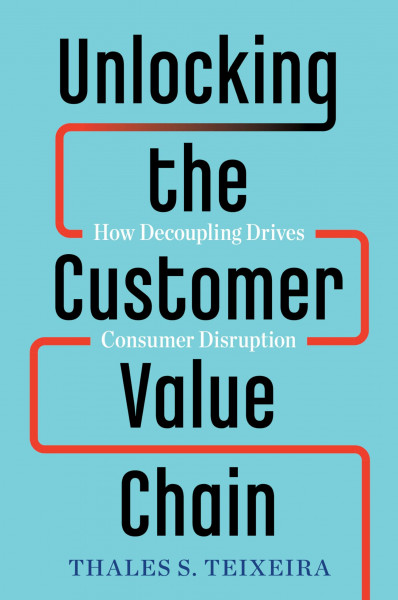
Unlocking the Customer Value Chain: How Decoupling Drives Consumer Disruption
inkl. MwSt. Versandinformationen
Lieferzeit 1-3 Werktage
Lieferzeit 1-3 Werktage
Kurzinformation

 Handgeprüfte Gebrauchtware
 Schnelle Lieferung
 Faire Preise
inkl. MwSt. Versandinformationen
Lieferzeit 1-3 Werktage
Lieferzeit 1-3 Werktage

Beschreibung
Based on eight years of research visiting dozens of startups, tech companies and incumbents, Harvard Business School professor Thales Teixeira shows how and why consumer industries are disrupted, and what established companies can do about it—while highlighting the specific strategies potential startups use to gain a competitive edge. There is a pattern to digital disruption in an industry, whether the disruptor is Uber, Airbnb, Dollar Shave Club, Pillpack or one of countless other startups that have stolen large portions of market share from industry leaders, often in a matter of a few years. As Teixeira makes clear, the nature of competition has fundamentally changed. Using innovative new business models, startups are stealing customers by breaking the links in how consumers discover, buy and use products and services. By decoupling the customer value chain, these startups, instead of taking on the Unilevers and Nikes, BMW’s and Sephoras of the world head on, peel away a piece of the consumer purchasing process. Birchbox offered women a new way to sample beauty products from a variety of companies from the convenience of their homes, without having to visit a store. Turo doesn't compete with GM. Instead, it offers people the benefit of driving without having to own a car themselves. Illustrated with vivid, indepth and exclusive accounts of both startups, and reigning incumbents like Best Buy and Comcast, as they struggle to respond, Unlocking the Customer Value Chain is an essential guide to demystifying how digital disruption takes place – and what companies can do to defend themselves.
Produktdetails

So garantieren wir Dir zu jeder Zeit Premiumqualität.


