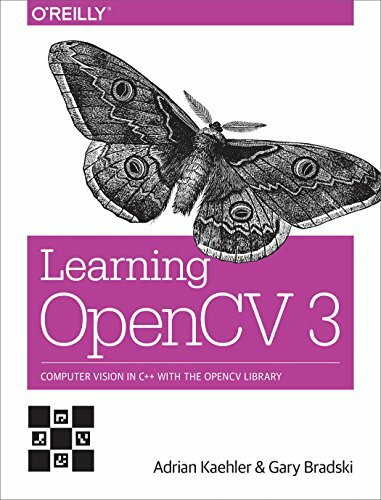
Learning OpenCV 3: Computer Vision in C++ with the OpenCV Library
Computer Vision in C++ with the OpenCV Library
Diese Beschreibung wurde mittels künstlicher Intelligenz generiert
"Learning OpenCV 3: Computer Vision in C++ with the OpenCV Library" von Gary Bradski ist ein umfassendes Handbuch zur Nutzung der OpenCV-Bibliothek für die Entwicklung von Computer-Vision-Anwendungen. Das Buch richtet sich an Entwickler, die ihre Fähigkeiten im Bereich der Bildverarbeitung und Mustererkennung erweitern möchten. Es deckt grundlegende Konzepte der Computer Vision ab und führt Schritt für Schritt durch die Implementierung verschiedener Algorithmen in C++. Themen wie Bildbearbeitung, Objektverfolgung, Kamerakalibrierung und maschinelles Lernen werden ausführlich behandelt. Mit praktischen Beispielen und Übungen bietet das Buch eine solide Grundlage, um eigene Projekte zu realisieren und komplexe visuelle Aufgaben zu bewältigen.
Dr. Adrian Kaehler is a senior scientist at Applied Minds Corporation. His current research includes topics in machine learning, statistical modeling, computer vision and robotics. Adrian received his Ph.D. in Theoretical Physics from Columbia university in 1998. Adrian has since held positions at Intel Corporation and the Stanford University AI Lab, and was a member of the winning Stanley race team in the DARPA Grand Challenge. He has a variety of published papers and patents in physics, electrical engineering, computer science, and robotics.Dr. Gary Rost Bradski is a consulting professor in the CS department at Stanford University AI Lab where he mentors robotics, machine learning and computer vision research. He is also Senior Scientist at Willow Garage http://www.willowgarage.com, a recently founded robotics research institute/incubator. He has a BS degree in EECS from U.C. Berkeley and a PhD from Boston University. He has 20 years of industrial experience applying machine learning and computer vision spanning option trading operations at First Union National Bank, to computer vision at Intel Research to machine learning in Intel Manufacturing and several startup companies in between. Gary started the Open Source Computer Vision Library (OpenCV http://sourceforge.net/projects/opencvlibrary/ ), the statistical Machine Learning Library (MLL comes with OpenCV), and the Probabilistic Network Library (PNL). OpenCV is used around the world in research, government and commercially. The vision libraries helped develop a notable part of the commercial Intel performance primitives library (IPP http://tinyurl.com/36ua5s). Gary also organized the vision team for Stanley, the Stanford robot that won the DARPA Grand Challenge autonomous race across the desert for a $2M team prize and helped found the Stanford AI Robotics project at Stanford http://www.cs.stanford.edu/group/stair/ working with Professor Andrew Ng. Gary has over 50 publications and 13 issued patents with 18 pending. He lives in Palo Alto with his wife and 3 daughters and bikes road or mountains as much as he can.




 Handgeprüfte Gebrauchtware
 Schnelle Lieferung
 Faire Preise