


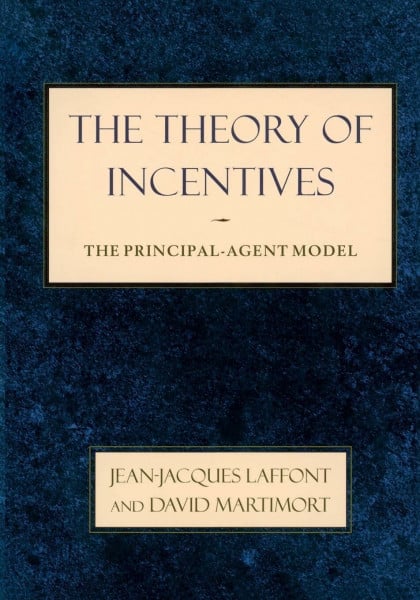
The Theory of Incentives: The Principal-Agent Model
Kurzinformation

 Handgeprüfte Gebrauchtware
 Schnelle Lieferung
 Faire Preise
inkl. MwSt. Versandinformationen
Lieferzeit 1-3 Werktage
Lieferzeit 1-3 Werktage

Beschreibung
Economics has much to do with incentives--not least, incentives to work hard, to produce quality products, to study, to invest, and to save. Although Adam Smith amply confirmed this more than two hundred years ago in his analysis of sharecropping contracts, only in recent decades has a theory begun to emerge to place the topic at the heart of economic thinking. In this book, Jean-Jacques Laffont and David Martimort present the most thorough yet accessible introduction to incentives theory to date. Central to this theory is a simple question as pivotal to modern-day management as it is to economics research: What makes people act in a particular way in an economic or business situation? In seeking an answer, the authors provide the methodological tools to design institutions that can ensure good incentives for economic agents. This book focuses on the principal-agent model, the "simple" situation where a principal, or company, delegates a task to a single agent through a contract--the essence of management and contract theory. How does the owner or manager of a firm align the objectives of its various members to maximize profits? Following a brief historical overview showing how the problem of incentives has come to the fore in the past two centuries, the authors devote the bulk of their work to exploring principal-agent models and various extensions thereof in light of three types of information problems: adverse selection, moral hazard, and non-verifiability. Offering an unprecedented look at a subject vital to industrial organization, labor economics, and behavioral economics, this book is set to become the definitive resource for students, researchers, and others who might find themselves pondering what contracts, and the incentives they embody, are really all about.
Produktdetails

So garantieren wir Dir zu jeder Zeit Premiumqualität.


