



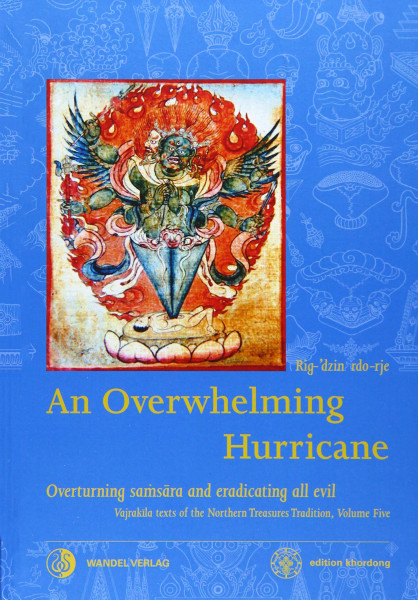
An Overwhelming Hurricane: Overturning samsara and eradicating all evil. Texts from the cycles of the Black Razor, Fierce Mantra & Greater than Great ... Tradition: edition khordong, Band 5)
Kurzinformation


 Handgeprüfte Gebrauchtware
 Schnelle Lieferung
 Faire Preise
inkl. MwSt. Versandinformationen
Artikel zZt. nicht lieferbar
Artikel zZt. nicht lieferbar

Beschreibung
The final volume in the Vajrakīla Texts of the Northern Treasures Tradition series contains a collection of twenty-five rare treasures from the original revelations of Rig-ʼdzin rgod-ldem and commentaries by skilled masters of the lineage. Including teachings from the cycles of Mantrabhīru and Mahottarakīla, recommended only for those who have studied the earlier volumes in the series, these profound treasures strike at the very core of our being and explain the methods by which one’s innermost beliefs, hopes and fears may be realigned in order to release an awesome hurricane of destructive power that will sweep away all falsehood. The eye of the storm, however, is serenely peaceful and pervaded by a sense of joyful liberation, confident understanding and loving compassion. May these teachings be encountered by worthy recipients! (1) The first of these texts, entitled The Threefold Firebrand, is a remarkable personal letter written by Guru Padma and addressed to the future revealer of the Byang-gter, dNgos-grub rgyal-mtshan. In the manner of a secret biography of the gter ston, Padma states that in ancient times he utilised the practice of Vajrakīla to destroy a colony of rāksasa demons dwelling upon a Dark Red Rocky Mountain in India. The relic bones of those slaughtered demons were imbued with great blessings and the mountain became known as a sacred power place of Vajrakīla. This ‘secret biography’ then traces the lineage of subsequent rebirths of one of those sets of bones until it finally arose in Tibet in the form of the treasure revealer rGod-ldem-can. The signs and omens of this profound connection between the guru and the gter ston are described, and rGod-ldem-can is given instructions concerning his Dharma activities and the manner in which he should conduct himself in the world. This amazing personal testament addressed to Rig-ʼdzin rGod-ldem also holds great value for ourselves as non-monastic followers of Padma’s treasure tradition because it contains specific instructions concerning how one should live as a hidden yogin, adopting an unassuming lifestyle. (2) The Steps for the Attainment of Siddhi speaks of innate natural awareness as pervading the dharmadhātu, and then goes on to describe the lineage through which this understanding, together with the means for its realisation, were absorbed by the three kāya of awakened buddhahood and subsequently transmitted to the human realm. (3) As for the Tantra of the Secret Embodiment of the Mind of Vajrakīla, this text offers a new interpretation of the manner in which the violent doctrines of wrath arose in order to overthrow the black demon Mātraṅgara Rudra, and how that demon became the great protector Mahākāla. As the story unfolds, we learn of the non-dual interdependence of the guru, deva, ḍākinī and protector and the tantric practices associated with each. (4) The Praise and Invocation that follows is derived from the Byang-gter cycle of the multicoloured deity, in which not only the chief deity has three faces and six arms but the ten krodharāja of his retinue, too, are endowed with three faces and six arms. This text includes rare verses of great interest dedicated to the twelve goddesses who play vitally active roles in the wrathful rites of the Vajrakīla maṇḍala. (5) The Daily Dedication of Bali Cakes, a small text by the Yol-mo sprul-sku Śākya bzang-po, describes the manner in which the yogin should present scattered offerings (bali) to the maṇḍala protectors on a regular basis. (6) And when it comes to the affairs of daily life, outside of the retreat, in order that the continuum of religious practice be maintained, we have here a collection of Eight Teachings on the Yoga of Everyday Life, garnered from the Kīlavidyottama tantra for the benefit of yogins so that, from the moment of waking up in the morning to the time of going to sleep at night, every step that is taken never strays beyonds the limitless infinitude of the perfect maṇḍala. (7) When preparing the Extensive Feast Offering to the Assembled Deities of the Vajrakīla Maṇḍala, the yogin transforms the skull bowl containing his food into the palace of skulls which is the residence of the assembly of maṇḍala deities. The meditation to achieve this echoes the steps through which the divine maṇḍala is recreated in the generation stage of Vajrakīla yoga. This practice, however, is much more a yoga of the completion stage in which the above eight teachings on the yoga of everyday life have now become so familiar that the adept finds himself holding the complete maṇḍala palace and retinue of deities in the palm of his hand. (8, 9, 10) The trilogy of texts known as the Lamp of the White Path, Iron Cloak of Obedient Servants, and Poisonous Black Razor, focuses upon the means of controlling those twelve unruly goddesses mentioned above, at the end of the fourth text. Although bound under oath by Padmasambhava in Nepal, the unswerving loyalty and obedience of these twelve wild females canno
Produktdetails

So garantieren wir Dir zu jeder Zeit Premiumqualität.


