
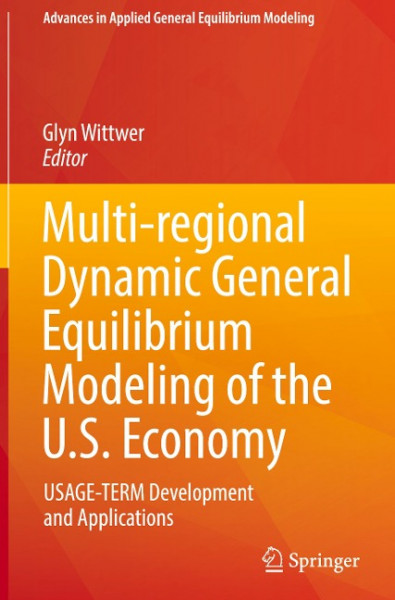
Multi-Regional Dynamic General Equilibrium Modeling of the U.S. Economy
Kurzinformation


 Handgeprüfte Gebrauchtware
 Schnelle Lieferung
 Faire Preise
inkl. MwSt. Versandinformationen
Artikel zZt. nicht lieferbar
Artikel zZt. nicht lieferbar

Beschreibung
This book details the preparation of USAGE-TERM, a computable general equilibrium model that provides regional economic detail in the USA. The model can represent either congressional district or state level economic activity. The latter may include a top-down representation of county activity. Interest in USAGE-TERM is growing among government departments. It is a practical tool, which may enhance analysis of productivity growth and innovation, adverse events such as drought or civil disruption and the dynamic economic impacts of major projects.Economic analysts and policy makers care about regions. Some regions suffer growing pains, as supporting infrastructure and services struggle to cope with population growth. Soaring house prices and rentals may lower affordability for many. Other regions suffer ongoing decline due to structural change. Regional economic fluctuations are often far more dramatic than national fluctuations. von Wittwer, Glyn
Produktdetails

So garantieren wir Dir zu jeder Zeit Premiumqualität.
Entdecke mehr vom Verlag