
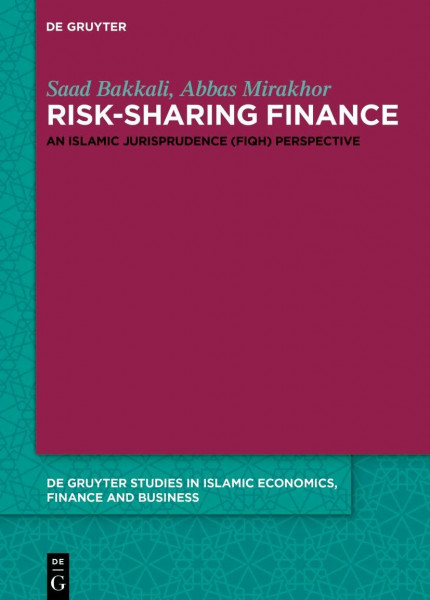
Risk-Sharing Finance: An Islamic Jurisprudence (Fiqh) Perspective (De Gruyter Studies in Islamic Economics, Finance and Business, 10)
inkl. MwSt. Versandinformationen
Lieferzeit 1-3 Werktage
Lieferzeit 1-3 Werktage
Kurzinformation

 Handgeprüfte Gebrauchtware
 Schnelle Lieferung
 Faire Preise
inkl. MwSt. Versandinformationen
Lieferzeit 1-3 Werktage
Lieferzeit 1-3 Werktage

Beschreibung
The contemporary finance deals mainly with multilateral and multi-counterparty transactions. Islamic Jurisprudence (Fiqh) has yet to develop its conceptualization of this modality of financing. Thus far, it has become a norm for large financing projects to rely on a complex structure of interconnected bilateral contracts that in totality becomes opaque, complex and costly. An unfortunate result of the unavailability of an efficient Fiqhi model applicable to modern multilateral and multi-counterparty contracts has been the fact that the present Islamic finance has been forced to replicate conventional risk-transfer (interest rate based) debt contracts thus drawing severe criticisms of duplicating conventional finance. In 2012, a gathering of some of the Muslim world’s most prominent experts in Jurisprudence (Fuqaha) and economists issued the Kuala Lumpur Declaration (Fatwa) in which they identified risk sharing as the essence of Islamic finance. The Declaration opened the door for a new Fiqh approach to take the lead in developing the jurisprudence of multilateral and multi-counterparty transactions. This Declaration (Fatwa) provides a prime motivation to search for a comprehensive model of risk sharing that can serve as an archetypal contract encompassing all potential contemporary financial transactions. From the perspective of Islamic Jurisprudence (Fiqh), the technicalities of the concept of risk sharing in contemporary finance have yet to be defined in Islamic literature. This book attempts to clarify and shed light on these technicalities from the perspective of Fiqh. It is a comprehensive study that relies on the fundamental Islamic sources to establish a theoretical and practical perspective of Fiqh encompassing risk-sharing Islamic finance as envisioned in the Kuala Lumpur Declaration of 2012. This new paradigm should lead to a more efficient approach to multilateral and multi-counterparty Islamic contracts which, here-to-fore has been lacking in the current configuration of Islamic finance.
Produktdetails

So garantieren wir Dir zu jeder Zeit Premiumqualität.
Entdecke mehr vom Verlag