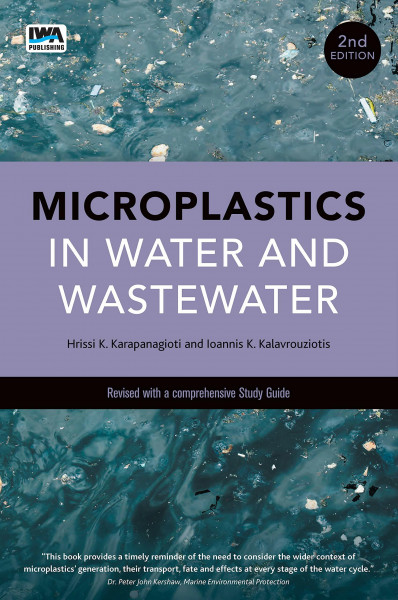
Microplastics in Water and Wastewater
Kurzinformation

 Handgeprüfte Gebrauchtware
 Schnelle Lieferung
 Faire Preise
inkl. MwSt. Versandinformationen
Lieferzeit 1-3 Werktage
Lieferzeit 1-3 Werktage

Beschreibung
The book covers in detail the topic of microplastics in water and wastewater. There is a growing interest in the scientific community in microplastics. Most of the studies identified the problems due to microplastics in the marine environment. However, considering that most microplastics are produced on land, similar problems should be encountered in freshwater systems and wastewater treatment plants that at the same time are the sources of marine microplastics. The human water cycle and points where the microplastics could interact with water will be presented as the introductory chapter. The subsequent chapters will examine evidence of the microplastics presence in freshwater such as both rivers and lakes and also, hazardous chemicals associated with microplastics in such systems. The following chapters will discuss the presence of microplastics in wastewater, their sources, their transfer through a wastewater treatment plant, their concentration in effluents throughout the world, and their distribution and effects on the surrounding environment of effluent wastewater pipes. Further chapters will discuss the sampling methods, the sample treatment and analysis techniques used so far for identifying microplastics in wastewater. Additionally, the presence of microplastics in sewage sludge and in soils irrigated with wastewater or fertilized with sludge, as well as the possible effects on plants and human health will be discussed. A concluding chapter will discuss the necessity for plastics strategies. In this second edition, a Study Guide is developed to be closely aligned with the content of the original text. Each study guide section includes the title of the relevant chapter, its aims, the expected learning outcomes, key concepts, a study plan, additional literature, and a set of self-assessment exercises and activities. Indicative answers to the self-assessment exercises and activities are provided at the end of the study guide. “All in all, the book is recommended for researchers and policymakers in the fields of environmental chemistry, civil engineering, city planning, waste management and toxicology. Furthermore, it is also worthwhile for those who are concerned about the effects of microplastics on biota and on humans.” Professor Hideshige Takada, Laboratory of Organic Geochemistry (LOG), Tokyo University of Agriculture and Technology, International Pellet Watch
Produktdetails

So garantieren wir Dir zu jeder Zeit Premiumqualität.