


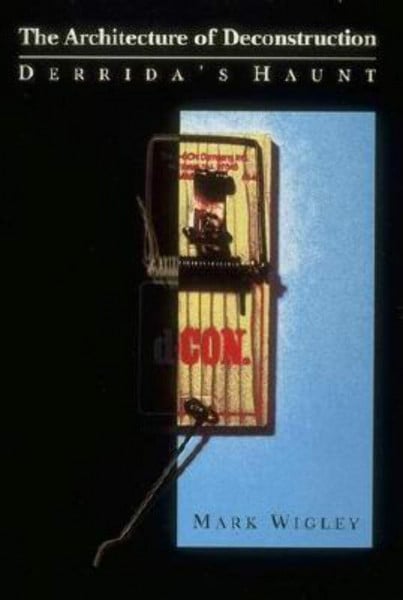
The Architecture of Deconstruction: Derrida's Haunt
Kurzinformation

 Handgeprüfte Gebrauchtware
 Schnelle Lieferung
 Faire Preise
inkl. MwSt. Versandinformationen
Lieferzeit 1-3 Werktage
Lieferzeit 1-3 Werktage

Beschreibung
Nowhere, Mark Wigley asserts, are the stakes higher for deconstruction than in architecturearchitecture is the Achilles' heel of deconstructive discourse, the point of vulnerability upon which all of its arguments depend. In this book Wigley redefines the question of deconstruction and architecture. By locating the architecture already hidden within deconstructive discourse, he opens up more radical possibilities for both architecture and deconstruction, offering a way of rethinking the institution of architecture while using architecture to rethink deconstructive discourse. Wigley relentlessly tracks the tacit argument about architecture embedded within Jacques Derrida's discourse, a curious line of argument that passes through each of the philosopher's texts. He argues that this seemingly tenuous thread actually binds those texts, acting as their source of strength but also their point of greatest weakness. Derrida's work is seen to render architecture at once more complex, uncanny, pervasive, unstable, brutal, enigmatic, and devious, if not insidious, while needing itself to be subjected to an architectural interrogation. Wigley provocatively turns Derrida's reading strategy back on his texts to expose the architectural dimension of their central notions like law, economy, writing, place, domestication, translation, vomit, spacing, laughter, and dance. Along the way he highlights new aspects of the relationship between Heidegger and Derrida, explores the structural role of ornament and the elusive architecture of haunting, while presenting a fascinating account of the institutional politics of architecture.
Produktdetails

So garantieren wir Dir zu jeder Zeit Premiumqualität.


