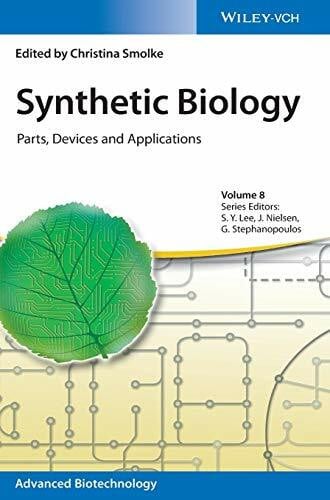
Synthetic Biology: Parts, Devices and Applications (Advanced Biotechnology, 8, Band 8)
Parts, Devices and Applications
Diese Beschreibung wurde mittels künstlicher Intelligenz generiert
"Synthetic Biology: Parts, Devices and Applications" von Gregory Stephanopoulos ist ein umfassendes Werk, das sich mit den Grundlagen und Anwendungen der synthetischen Biologie beschäftigt. Das Buch gehört zur Reihe "Advanced Biotechnology" und bietet einen detaillierten Überblick über die Prinzipien, Methoden und Technologien, die in diesem aufstrebenden Feld verwendet werden.
Der Inhalt des Buches ist in mehrere Abschnitte unterteilt. Zunächst werden die grundlegenden Bausteine der synthetischen Biologie vorgestellt, darunter genetische Teile und Module, die für den Aufbau komplexer biologischer Systeme notwendig sind. Anschließend wird auf die Entwicklung von biologischen Geräten eingegangen, die spezifische Funktionen erfüllen können.
Ein weiterer Schwerpunkt liegt auf den vielfältigen Anwendungen der synthetischen Biologie in verschiedenen Bereichen wie Medizin, Industrie und Umwelttechnik. Das Buch diskutiert aktuelle Fortschritte bei der Herstellung von Biokraftstoffen, der Entwicklung neuer Therapien und der Schaffung nachhaltiger Produktionsmethoden.
Insgesamt bietet das Buch sowohl theoretische als auch praktische Einblicke und richtet sich an Wissenschaftler, Ingenieure und Studierende im Bereich der Biotechnologie. Es vermittelt ein tiefgehendes Verständnis dafür, wie biologische Systeme konstruiert und genutzt werden können, um innovative Lösungen für drängende globale Herausforderungen zu entwickeln.
Series editors:
Sang Yup Lee is Distinguished Professor at the Department of Chemical and Biomolecular Engineering at the Korea Advanced Institute of Science and Technology (KAIST). He is currently the Director of the Center for Systems and Synthetic Biotechnology, Director of the BioProcess Engineering Research Center, and Director of the Bioinformatics Research Center. He received numerous awards, including the National Order of Merit, the Merck Metabolic Engineering Award and the Elmer Gaden Award. Lee is the Editor-in-Chief of the Biotechnology Journal and Associate Editor and board member of numerous other journals. Lee is currently serving as a member of Presidential Advisory Committee on Science and Technology (Korea).
Jens Nielsen has a PhD degree (1989) in Biochemical Engineering from the Danish Technical University (DTU), and after that established his independent research group and was appointed full Professor there in 1998. He was Fulbright visiting professor at MIT in 1995-1996. At DTU he founded and directed the Center for Microbial Biotechnology. In 2008 he was recruited as Professor and Director to Chalmers University of Technology, Sweden. Jens Nielsen has received numerous Danish and international awards including the Nature Mentor Award, and is member of several academies, including the National Academy of Engineering in USA and the Royal Swedish Academy of Science. He is a founding president of the International Metabolic Engineering Society.
Professor Gregory Stephanopoulos is the W. H. Dow Professor of Chemical Engineering at the Massachusetts Institute of Technology (MIT, USA) and Director of the MIT Metabolic Engineering Laboratory. He is also Instructor of Bioengineering at Harvard Medical School (since 1997). He has been recognized by numerous awards from the American Institute of Chemical Engineers (AIChE) (Wilhelm, Walker and Founders awards), American Chemical Society (ACS), Society of industrial Microbiology (SIM), BIO (Washington Carver Award), the John Fritz Medal of the American Association of Engineering Societies, and others. In 2003 he was elected member of the National Academy of Engineering (USA) and in 2014 President of AIChE.
Volume editors of the Synthetic Biology Volume:
Christina Smolke is Professor at Stanford University in the Department of Bioengineering. Before being recruited to Stanford, she was an Assistant Professor in the Department of Chemical Engineering at Caltech. Christina`s research program focuses on developing modular genetic platforms for programming information processing and control functions in living systems. She has pioneered the design and application of RNA molecules that process and transmit user-specified input signals to targeted protein outputs, thereby linking molecular computation to gene expression. These technologies are leading to transformative advances in how we interact with and program biology, providing access to otherwise inaccessible information on cellular state, and allowing sophisticated exogenous and embedded control over cellular functions. Her laboratory is applying these technologies to addressing key challenges in cellular therapeutics, targeted molecular therapies, and green biosynthesis strategies. Christina?s innovative research program has been recognized with the receipt of several awards, including the NSF CAREER Award, Beckman Young Investigator Award, Alfred P. Sloan Research Fellowship, World Technology Network Award in Biotechnology, and Technology Review`s TR35 Award.





 Handgeprüfte Gebrauchtware
 Schnelle Lieferung
 Faire Preise