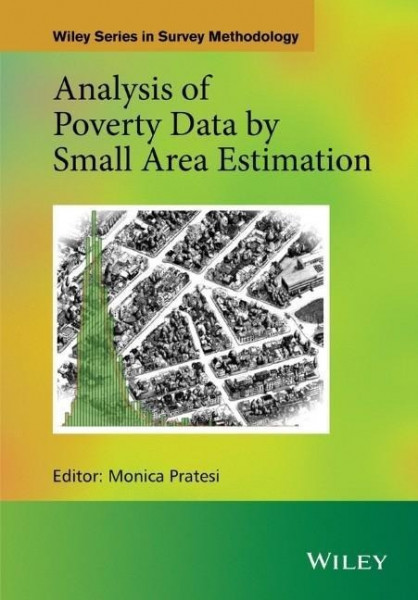
Analysis of Poverty Data by Small Area Estimation
Kurzinformation


 Handgeprüfte Gebrauchtware
 Schnelle Lieferung
 Faire Preise
inkl. MwSt. Versandinformationen
Artikel zZt. nicht lieferbar
Artikel zZt. nicht lieferbar

Beschreibung
A comprehensive guide to implementing SAE methods for poverty studies and poverty mapping There is an increasingly urgent demand for poverty and living conditions data, in relation to local areas and/or subpopulations. Policy makers and stakeholders need indicators and maps of poverty and living conditions in order to formulate and implement policies, (re)distribute resources, and measure the effect of local policy actions. Small Area Estimation (SAE) plays a crucial role in producing statistically sound estimates for poverty mapping. This book offers a comprehensive source of information regarding the use of SAE methods adapted to these distinctive features of poverty data derived from surveys and administrative archives. The book covers the definition of poverty indicators, data collection and integration methods, the impact of sampling design, weighting and variance estimation, the issue of SAE modelling and robustness, the spatio-temporal modelling of poverty, and the SAE of the distribution function of income and inequalities. Examples of data analyses and applications are provided, and the book is supported by a website describing scripts written in SAS or R software, which accompany the majority of the presented methods. Key features: * Presents a comprehensive review of SAE methods for poverty mapping * Demonstrates the applications of SAE methods using real-life case studies * Offers guidance on the use of routines and choice of websites from which to download them Analysis of Poverty Data by Small Area Estimation offers an introduction to advanced techniques from both a practical and a methodological perspective, and will prove an invaluable resource for researchers actively engaged in organizing, managing and conducting studies on poverty. von Pratesi, Monica
Produktdetails

So garantieren wir Dir zu jeder Zeit Premiumqualität.